Petra Lang · 17 September 2026
Community Print Workshops Fuse Historical Archives with Ethical Reporting to Counter Digital Overload in Polarized Times
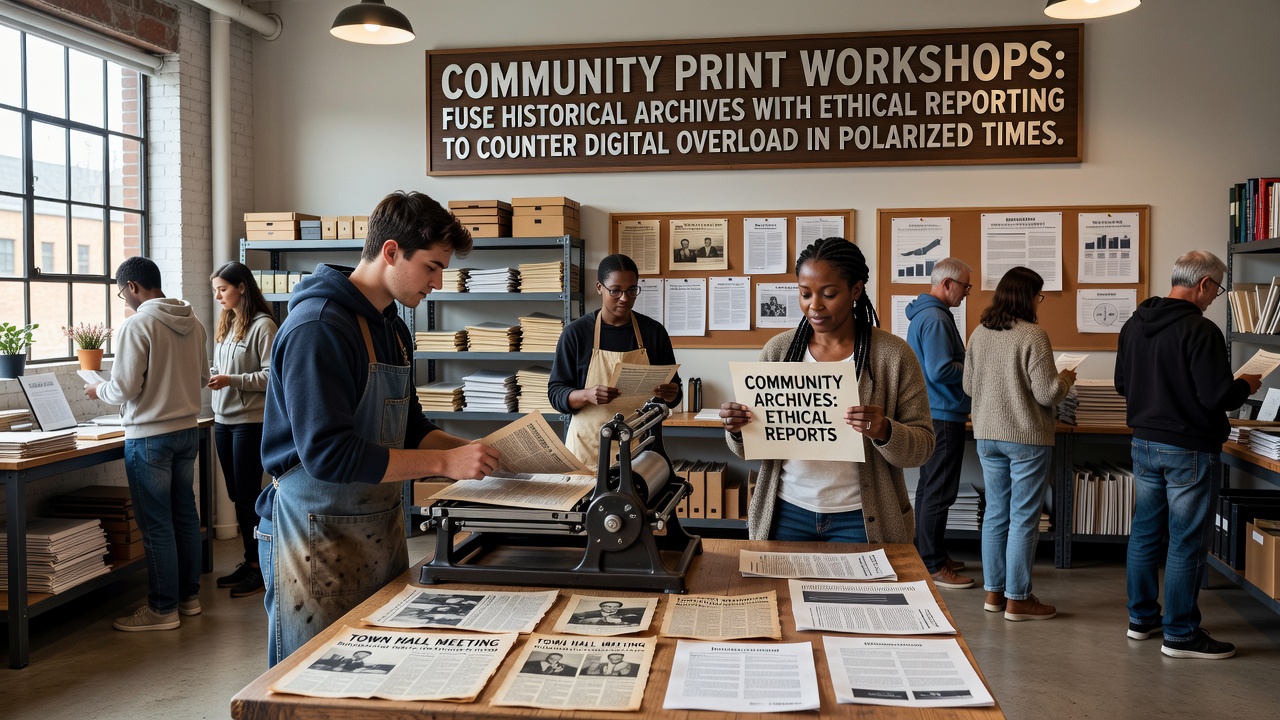
Community print workshops have emerged as structured programs that bring together local residents, archivists, and journalists to repurpose materials from historical collections for contemporary reporting projects, and these initiatives operate across multiple regions including North America, Europe, and Australia. Organizers coordinate sessions where attendees review primary documents from municipal libraries and national repositories while applying verification protocols drawn from established journalistic standards, and the approach addresses patterns of information saturation that researchers have documented in surveys conducted by institutions such as the Pew Research Center. Workshops typically run for several weeks and incorporate hands-on printing techniques alongside structured analysis of archival sources, which allows participants to produce physical pamphlets and newsletters that circulate within neighborhoods. Data from regional library networks indicate that enrollment in these programs rose steadily between 2023 and 2025, with additional increases projected for September 2026 when several municipal cultural departments schedule coordinated events to mark archive digitization anniversaries. Facilitators emphasize cross-referencing multiple records to establish context, a method that mirrors procedures outlined in guidelines from the International Federation of Library Associations and Institutions.Integration of Archival Materials
Archivists supply collections that include municipal records, personal correspondence, and period photographs, and workshop leaders guide attendees through catalog systems to locate items relevant to current local issues such as infrastructure changes or demographic shifts. Participants transcribe excerpts and cross-check dates against secondary sources, which produces annotated print pieces that retain original language while adding explanatory notes. Observers note that this process recreates the editorial workflow used by early twentieth-century community presses, and similar models appear in programs run by the National Library of Australia where volunteers compile regional histories for public distribution.
One documented case involved a Midwestern U.S. county archive that partnered with a neighborhood association to reprint 1930s relief program ledgers alongside contemporary interviews, and the resulting publication circulated among 2,500 households according to distribution logs maintained by the local historical society. Such projects rely on open-access policies at participating institutions, which reduces barriers for non-specialists while maintaining chain-of-custody requirements for fragile documents.Ethical Reporting Protocols
Ethical frameworks applied during workshops draw from codes developed by journalism associations in Canada and the European Union, requiring attribution of every sourced element and disclosure of any interpretive additions. Facilitators instruct participants to flag potential conflicts of interest before drafting content, and groups review drafts collectively to verify that claims remain supported by the archival record. Reports produced through these sessions avoid speculative language, and the emphasis on transparency aligns with recommendations issued by the European Commission’s digital services unit on content provenance.
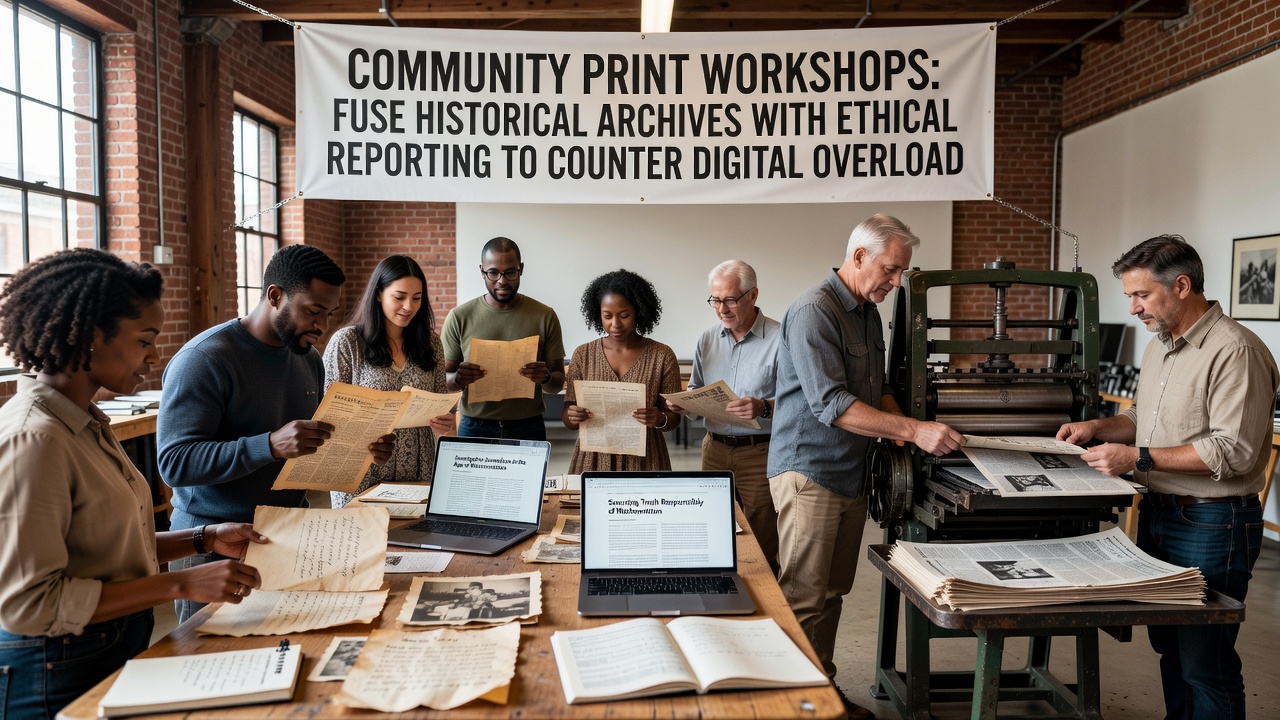 Sessions allocate time for discussion of sourcing ethics, and attendees practice distinguishing between primary evidence and later commentary. This structure mirrors training modules offered by university extension programs, where enrollment data shows consistent demand from adult learners seeking alternatives to algorithm-driven feeds. The resulting print outputs include disclaimers that identify the workshop date and participating institutions, which provides readers with clear provenance details absent from many online posts.
Addressing Digital Overload and Polarization
Studies compiled by Statistics Canada have tracked average daily screen time exceeding six hours among adults, correlating with reported fatigue from conflicting online narratives. Workshop organizers respond by limiting session access to physical materials during meetings, which creates intervals free from notifications and algorithmic amplification. Printed outputs then serve as offline reference points that residents can consult without returning to digital platforms, and circulation records from participating libraries show higher retention rates for these items compared with standard newsletters.
In polarized environments, the reliance on dated archival evidence supplies a shared factual baseline that contemporary social media threads often lack. Groups in several European cities have adapted the model to local election coverage by reproducing period voting records alongside current registry data, and preliminary tallies from municipal offices indicate that distribution of these print summaries coincided with modest upticks in verified voter information requests. The method does not eliminate disagreement but supplies a tangible record that readers can examine at their own pace.Expansion and Measurement
By September 2026, additional cities in the United Kingdom and Scandinavia plan to launch parallel programs funded through cultural heritage grants, and planners cite usage statistics from earlier pilots as justification. Metrics collected by participating libraries include print-run quantities, return rates of distributed materials, and follow-up inquiries received at reference desks. These indicators help organizers adjust session length and topic selection without introducing subjective quality judgments. Cooperation between print workshops and university communications departments has produced case compilations that document procedural variations across sites, and these compilations remain accessible through institutional repositories. The approach continues to evolve through incremental adjustments based on participation logs rather than external mandates.
Conclusion
Community print workshops that combine historical archives with ethical reporting procedures continue to expand in response to documented patterns of digital saturation and information fragmentation. The model relies on established archival access policies, verification routines drawn from professional codes, and physical distribution channels that operate independently of platform algorithms. As additional locations prepare events for September 2026, the accumulated records from earlier sessions provide a growing dataset for evaluating reach and retention within local populations.