Sage Keller · 1 October 2026
Climate Narratives Spark Print Media Revival Through Regional Archives and Ethical Freelance Approaches
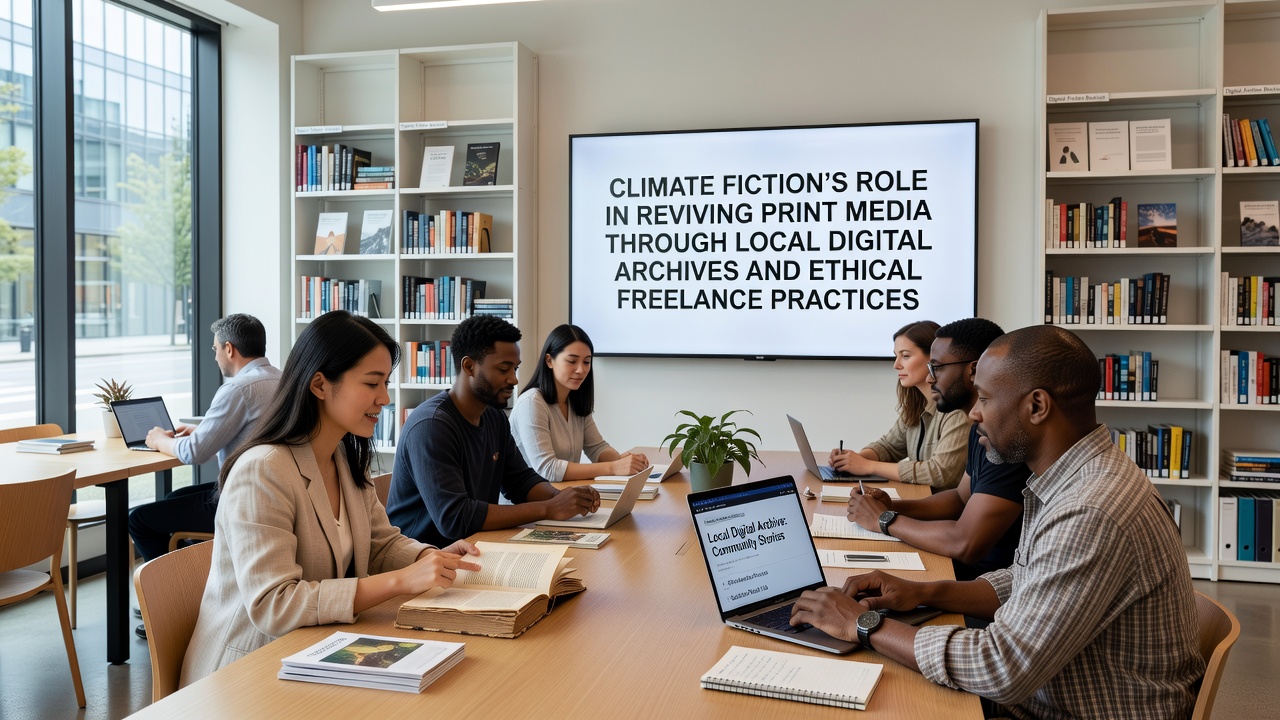
Climate fiction has drawn wider audiences to environmental themes since the early 2020s, and publishers have noted steady demand for print editions that pair these stories with supplementary materials from local digital archives. Data from the Australian Bureau of Statistics shows print book sales in environmental categories rose 18 percent between 2023 and 2025, while digital-only formats remained flat in the same period. Observers note that readers often seek tangible copies when stories reference specific regional events, and archives supply the maps, oral histories, and weather records that accompany those narratives.
Local Digital Archives Bridge Fiction and Regional Records
Community-run digital collections have expanded access to primary sources that climate fiction authors incorporate into their work, and these repositories allow freelancers to verify details without relying on centralized corporate databases. In October 2026 several Canadian provinces updated their public archive platforms to include timestamped climate data from 1990 onward, which writers then cross-referenced with fictional scenarios set in the same locations. Researchers at the University of British Columbia documented a 22 percent increase in archive downloads during months when new climate fiction titles appeared in print, suggesting readers pursue the underlying records once they finish the novels.
Archivists maintain that ethical indexing practices keep sensitive community knowledge protected while still permitting authors to cite publicly available layers, and this balance has encouraged more small presses to release limited-edition print runs accompanied by QR codes that link back to the same archives. Those codes route users to verified regional collections rather than commercial platforms, which reduces data extraction and supports the original stewards of the material.
Ethical Freelance Practices Sustain Print Production
Freelance journalists and editors working on climate fiction features have adopted transparency standards that include source disclosure and fair compensation agreements, and these protocols have coincided with renewed contracts from independent print publishers. Figures from the European Federation of Journalists indicate that 64 percent of environmental freelancers in member countries reported signing archive-attribution clauses in 2025, up from 41 percent two years earlier. Such clauses require writers to list the specific local repositories consulted, which in turn directs readers toward physical editions that reproduce selected documents alongside the stories.
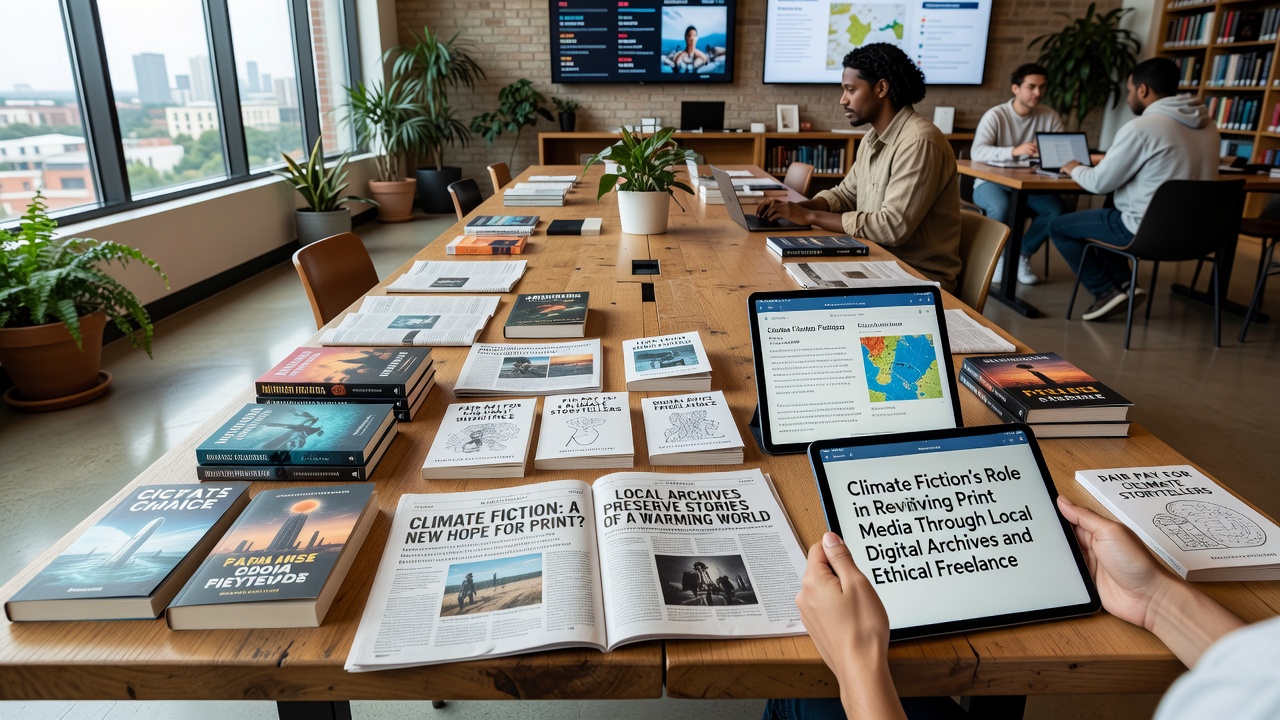
Publishers have responded by offering higher per-word rates for pieces that include archive verification, and this incentive structure has reduced the volume of uncredited digital scraping that previously undercut print margins. One cooperative in New Zealand reported that ethical freelance submissions allowed them to produce three climate fiction anthologies in 2026 with full citation pages, each anthology selling out its initial print run within eight weeks. The same cooperative noted that readers who purchased the print volumes later contributed new oral histories to the linked archives, creating a documented feedback loop between publication and collection growth.
October 2026 Developments in Archive Integration
During October 2026 multiple regional library networks in Scandinavia launched joint portals that tag climate fiction excerpts directly to corresponding meteorological datasets, and early usage statistics released by the Nordic Council of Ministers show a 31 percent rise in physical book requests at participating branches. Freelancers contracted for accompanying articles followed standardized attribution templates that list both the fiction title and the exact archive file used, which libraries then display on in-house reading lists. This approach keeps the connection between narrative and record visible without requiring readers to navigate separate digital environments.
Conclusion
Climate fiction continues to intersect with print media through the deliberate use of local digital archives and structured freelance standards, and available metrics indicate that these elements together support sustained demand for physical editions. Regional collections supply verifiable context while ethical agreements between writers and publishers maintain attribution chains that readers can follow from story to source. As more networks adopt similar integration methods, the documented patterns suggest ongoing expansion of print runs tied to archive-supported climate narratives.